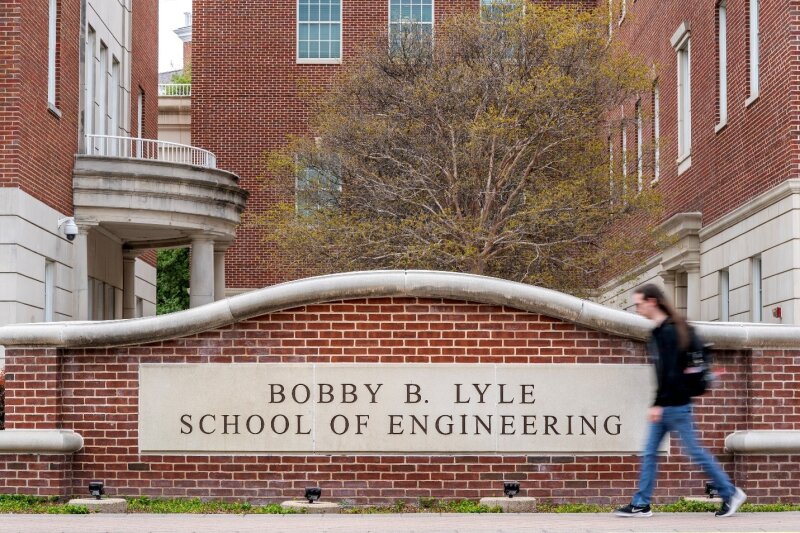
Lyle School of Engineering
Subpages
- Lyle School of Engineering
- Departments
- Programs of Study
- Undergraduate Admission
- Undergraduate Academic Regulations
- Professional Engineering Licensure
- Undergraduate Internship & Cooperative Education
- Accelerated Pathways Master's Degree Program
- Graduate Admission
- Master of Science and Master of Arts Degrees
- Doctor of Engineering Degrees
- Doctor of Philosophy Degrees
- Graduate International Student Pathways Program (GRISP)
- Graduate Cooperative Education Program
- Off-Campus Graduate Education
Lyle School of Engineering
General Information
The Lyle School of Engineering, named in 2008 to honor Dallas entrepreneur and industry leader Bobby B. Lyle, has a rich history of innovation dating back to 1925. It all began when the Technical Club of Dallas, a group of practicing engineers, urged SMU to establish an engineering school to meet the growing needs of the Southwest. In response, SMU launched one of the first cooperative education programs in the U.S.—a hands-on initiative that still empowers students today by integrating real-world technical experience into their education.
Lyle’s cutting-edge curriculum spans civil engineering, computer science, electrical and computer engineering, environmental engineering, mechanical engineering, and operations research and engineering management. Situated in the heart of Dallas, a hub for high-tech innovation and research, the school benefits from strong industry partnerships. Students also have access to state-of-the-art labs, cutting-edge equipment, and real-world problem-solving opportunities.
The Lyle School of Engineering has grown to become a thriving school, with graduate programs in a variety of areas. The school is organized into the following five departments: Civil and Environmental Engineering; Computer Science and Engineering; Electrical Engineering; Mechanical Engineering; and Operations Research and Engineering Management
The Dallas area’s national prominence in high technology and research has been beneficial to the Lyle School of Engineering and its students. Corporate support for the Lyle School has generated a remarkable array of equipment and laboratories.
The Lyle School is also home to several premier research and innovation facilities, including:
Center for Digital and Human-Augmented Manufacturing (CDHAM).
CDHAM is a hub for cutting-edge research and development in digital twin technology, artificial intelligence and machine learning (AI/ML) applications, augmented and virtual reality (AR/VR), and human-robot collaboration (HRC). Its state-of-the-art laboratories and workshops are equipped with the latest technologies, making it an ideal environment for fostering innovation in manufacturing and related fields. CDHAM enables faculty, staff, and students to perform computational simulation of manufacturing processes and resulting material properties using on-campus computing resources, including the University’s high-performance computing ecosystem.
Darwin Deason Institute for Cyber Security.
The institute advances the science of cyber security through basic and problem-driven research. The Institute conducts broad programs of research that
Apply an interdisciplinary approach to challenging problems and incorporate elements from disciplines not traditionally associated with cyber security.
Create a science of cyber security and address priorities in the national arena.
Help close the skills gap in cyber security by tapping into the innovation capabilities of students to meet the demand for trained cyber professionals.
Caruth Institute for Engineering Education.
The mission of the Caruth Institute for Engineering Education is to conduct research and develop programs that create and facilitate educational pathways for youth, K-12, and postsecondary students to engage in Engineering, STEM, and Design practices as preparation for entering and succeeding in 21st Century skills, professions, and workforce opportunities.
Hunter and Stephanie Hunt Institute for Engineering and Humanity.
The Hunter and Stephanie Hunt Institute for Engineering & Humanity is dedicated to developing and scaling sustainable and affordable technologies and solutions to the challenges facing under-resourced communities. A hub and convening platform for business, academia, NGOs and governmental organizations, we foster market-based mechanisms to create sustainable livelihood opportunities that respect the dignity of individuals and communities in Texas and around the world.
Hart Center for Engineering Leadership (HCEL).
The center was created in 2008 with the belief that the leadership and professional development of engineering students should not wait until after graduation. In fact, the Lyle School maintains that this development should coincide with students’ technical training as they become aware of what it means to be ethical and credible professional engineers.
At the Hart Center, we pair an elite technical education with exceptional leadership and professional development skills to produce world-changing engineer leaders. We help students take advantage of Dallas-Fort Worth’s thriving advanced technology environment and provide them with the foundation needed to build leadership skills and lead high-performance technical teams. With expert guidance from the Hart Center team, Lyle students are engineered to lead with Emotional Intelligence and empowered to succeed.
Leadership Development
Hart Leadership Emotional Intelligence (EQ) Assessment is provided to all interested students to determine their leadership strengths and areas for further improvement.
One-on-one coaching is provided to students who are in the leadership program.
Leadership certificate.
The Student Engineering Joint Council holds retreats, events and leadership training.
Partners in Leadership Mentoring pairs students with mid- to senior-level professionals.
Lyle Career Development Center.
The Lyle Career Development Center provides a comprehensive range of services, programs and materials that focus on career exploration and professional development for undergraduate, master’s, and PhD students. Unique networking opportunities, like Engineering Resumania and the Engineering Connections Career Fair, give students the tools they need for success in the workforce.
Career coaching helps students research and prepare for interviews with engineering companies.
12twenty career database allows students to register for interviews and submit resumes online.
Engineering Resumania provides students with employer resume reviews in a riskless environment.
The Lyle Engineering Connections career fair attracts globally recognized companies seeking to hire engineers for internship, co-op and full-time positions.
Internships and Co-ops integral to the Lyle School are directed by Lyle Career Development staff.
Linda and Mitch Hart Institute for Technology, Innovation and Entrepreneurship.
Founded in 2019, the Linda and Mitch Hart Institute for Technology, Innovation and Entrepreneurship combines the innovated forces of SMU’s Cox School of Business and Lyle School of Engineering. The institute advances SMU’s vision to promote technology and entrepreneurship through five key components: Business Plan Competition Award; Entrepreneur-in-Residence; Graduate Fellowships; Faculty Fellows; and the Linda and Mitch Hart Technology Transfer Fund.
Lyle Advising Team
The Lyle School of Engineering Advising Team provides personalized guidance to help students successfully navigate their academic journey. Advisors assist with degree planning, course registration, academic policies, and connections to campus resources, helping students stay on track toward graduation.
A key benefit of Lyle's advising model is access to school-specific support. Because advisors work directly within the engineering school, they understand the curriculum, opportunities, and challenges unique to engineering students. This specialized guidance helps students make informed decisions, maximize their educational experience, and prepare for future career success.
In addition to working with professional advisors, students have opportunities to connect with Lyle faculty for guidance on academic interests, research opportunities, career pathways, and professional development. Advisors help students identify and access the resources, programs, and faculty connections that best support their individual goals.
Through accessible, student-centered support, the Lyle Advising Team helps students make the most of their engineering education and successfully navigate both academic and professional opportunities.
Deason Innovation Gym (DIG)
The Deason Innovation Gym (DIG) is a makerspace at Southern Methodist University that provides students, faculty, staff, and alumni with the tools, resources, and training needed to bring ideas to life. The facility offers equipment such as 3D printers, electronics tools, and fabrication equipment to support technical, entrepreneurial, and artistic projects.
The DIG promotes hands-on learning through workshops and training sessions that help users develop practical skills while exploring their creativity. Its mission is to empower individuals to create innovative, human-centered solutions by encouraging experimentation, collaboration, and learning through experience.
By providing access to advanced resources and a supportive community, the DIG helps members of the SMU community develop technical skills, solve complex problems, and turn ideas into reality.
Administration and Faculty
Dean's Office
Faculty